
GARTNER® HYPE CYCLE REPORT

Agentic AI, autonomous planning, decision-centric planning: what's real and what's next

AdobeStock_1574090984_magnifying-glass-Recovered-

Gartner® places all three in the 2026 Hype Cycle for Supply Chain Planning Technologies. Here's how they connect, and the order they have to be built in.


Decision-centric planning | Autonomous planning | Agentic AI | Build in this order


You cannot automate a decision you haven't defined.


That single constraint sets the order these three technologies have to arrive in, and most roadmaps have them backwards. Agents get budget before anyone has written down who owns which call, at what threshold, weighing what against what.

Get the 2026 Gartner Hype Cycle™ report

25+ planning technologies, rated on maturity, benefit, and time to adoption. 

Start with the decision, not the process

Most planning runs on a calendar. Monthly cycle, weekly review, a handover every time the horizon changes. Decision-centric planning runs on the decision instead, and on the quality of the call someone makes when a supplier misses or a line goes down.


In our opinion, Gartner is direct about this shift, and it's the direction OMP committed to with Unison Decision-Centric Planning. Evonik Oxeno shows what this move looks like in practice: David Kochanek, Evonik Supply Chain Solution Manager, reports that shifting from process-centric to decision-centric planning let them run hundreds of scenarios weekly in Unison Planning™, improving both decisions and performance.
How Evonik Oxeno drives supply chain excellence with decision-centric planning-SQ

Start with the decision, not the process

Most planning runs on a calendar. Monthly cycle, weekly review, a handover every time the horizon changes. Decision-centric planning runs on the decision instead, and on the quality of the call someone makes when a supplier misses or a line goes down.


In our opinion, Gartner is direct about this shift, and it's the direction OMP committed to with Unison Decision-Centric Planning. Evonik Oxeno shows what this move looks like in practice: David Kochanek, Evonik Supply Chain Solution Manager, reports that shifting from process-centric to decision-centric planning let them run hundreds of scenarios weekly in Unison Planning™, improving both decisions and performance.
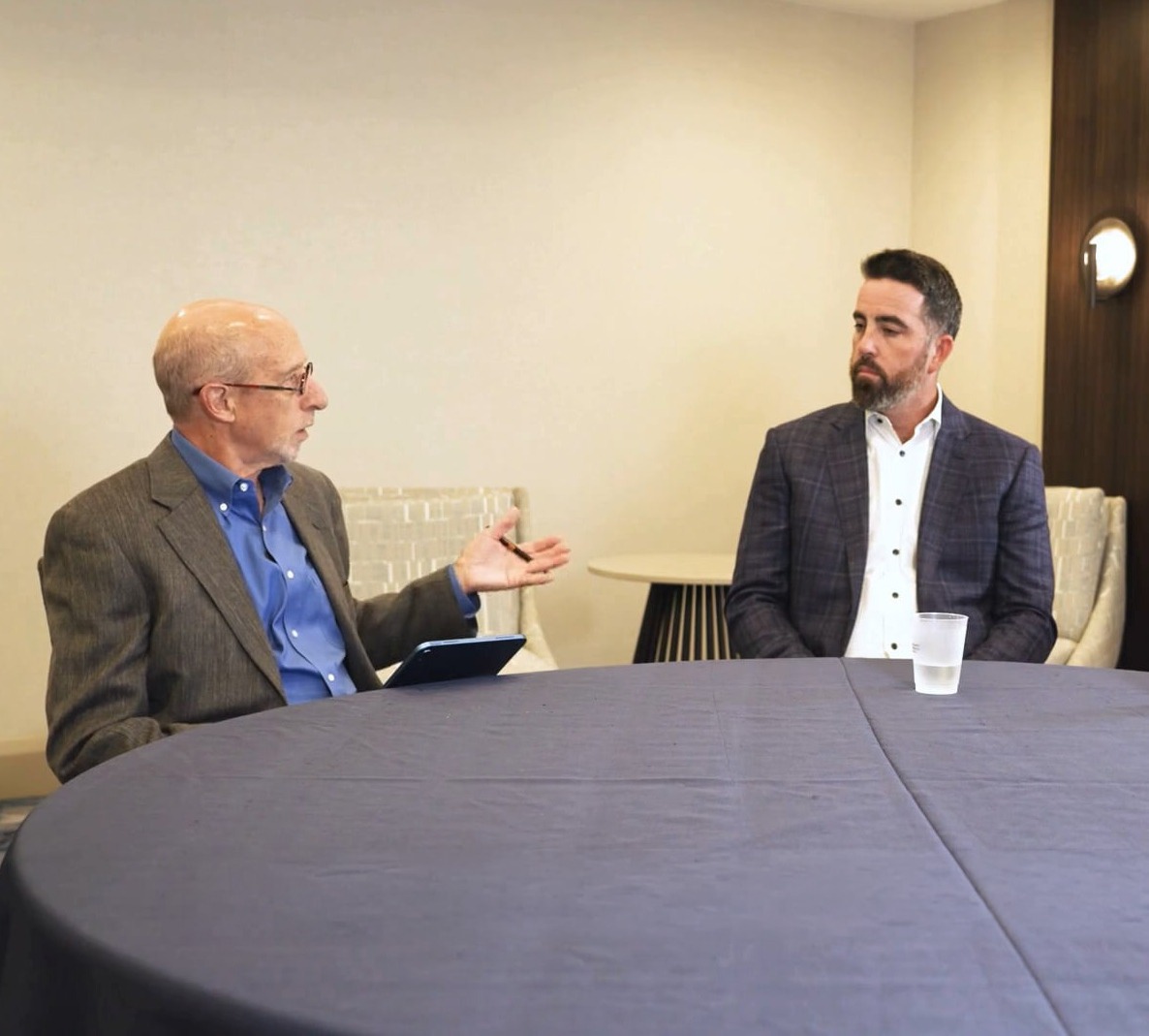
Doing this properly is less about technology than about writing things down: which decisions matter, who owns each one, and what each is allowed to weigh before it escalates. A campaign-planning decision in specialty chemicals and an allocation call under regulatory constraint in pharma are nothing alike and should not inherit the same governance, which is why Unison Planning arrives with industry-specific logic rather than a blank canvas.


One structural prerequisite is easy to skip past. Explicit decisions across horizons are impossible if demand, supply, inventory, and scheduling each sit in their own isolated system with their own logic. Four systems produce four defensible answers and no way to choose between them. One model is what makes a decision executable.


Get that far and automation stops being a risk and starts being a choice.


Build autonomy progressively, not all at once

The Gartner report on autonomous planning is deliberately cautious. Be specific about which decisions are ready for autonomy. Favor keeping a human in the loop over full automation. We agree, which is why OMP's road map moves in three stages rather than one.

    • AI-assisted operations. The system proposes; the planner decides. Trust is earned on visible, checkable recommendations
    • Agentic teamwork. Agents take on defined tasks and hand back anything outside their bounds. The planner supervises rather than executes.
    • Autonomous planning. For decisions where the rules are well understood and the risk is contained, the system acts.
thumb--

Mark Trainor, Senior Director of Global Transformation and Technology at AstraZeneca, describes using Unison Companion inside Unison Planning™ to drive adoption of their planning framework through a large language model, and sees agents for specific planner personas as a way to take teams off the daily planning grind.


Where this gets real is the mapping. Two decisions in the same company, in the same week, can belong in different stages. Replenishment on stable, high-volume SKUs may be ready to run largely unsupervised while a constrained-capacity trade-off across three sites stays firmly with a planner. Teams that segment by planning function get this wrong. Segment by risk and by how well the rules are understood, and staged autonomy holds up at scale. That work is a decision-mapping exercise rather than a software feature, and it's where our people sit alongside your planners.

Most organizations have more room in stage one than they think.

Architected for agents, not rushing to ship them

Gartner rates agentic AI for SCP as a transformational benefit rating and puts market penetration as less than 1% of the target audience. The potential is real, the market is early, and a lot of what carries the agentic label today overlaps with automation that already existed.

So the useful question about any planning agent is what it can do on its own. Can it make a planning decision and defend it, or does it surface one and wait? Either answer depends less on the agent than on what sits beneath it. An agent operating across a fragmented planning estate doesn't produce autonomy. It produces fast, confident, untraceable errors.


UnisonIQ is OMP's answer to what has to exist underneath. It's an AI orchestration framework embedded in Unison Planning, pulling together always-on decision-centric agents, the Unison Companion assistant, and the machine learning, optimization, and explainable AI engines behind them.

Build in this order

Define the decisions. Earn trust in stages. Let agents extend the reach once both are in place. Organizations that run it backward automate the wrong things faster, which is an expensive way to discover the sequence. The ones getting value are working through it in order.

Gartner, Hype Cycle for Supply Chain Planning Technologies, 2026, Eva Dawkins, Joe Graham, Pia Orup Lund, Jan Snoeckx, Buse Aras, 7 July 2026


Gartner and Hype Cycle are trademarks of Gartner, Inc., and/or its affiliates.


Gartner does not endorse any company, vendor, product or service depicted in its publications, and does not advise technology users to select only those vendors with the highest ratings or other designation. Gartner publications consist of the opinions of Gartner’s business and technology insights organization and should not be construed as statements of fact. Gartner disclaims all warranties, expressed or implied, with respect to this publication, including any warranties of merchantability or fitness for a particular purpose.